
If Only the Light Could Stay

If Only the Light Could Stay
Ryan Oskin and Song Watkins Park
Curated by Patrick Bower and Greg Dzurita
September 12th, 2026 - October 4th, 2026
When I arrived in the city, I could tell right away my clothes wouldn’t cut it. There was too much coming at me: barrier-resistant grime, bus fumes, mystery water, street carrion and prismatic oil puddles. I was always climbing up something or sitting on something I shouldn’t. Iron fences were held up by desiccated layers of leaded pigments! Traffic cones protruded like buoys from the vortex of asphalt sinkholes!
That first year was tough. I tried on different armors: denim and leather, aloof disaffection, rage and combat boots. I tried to master the signs and rules of the road and sidewalks. I was frequently injured. I learned why they call it The Naked City. Those were the days of smoking cigarettes and sipping from flasks on rooftops. One evening at sundown, I emerged from inside the winking, winding blue aisles of a server farm to find myself on the makeshift observation deck of the T-Mobile data center in Tribeca, quite illegally. I sat on the tarpaper and leaned my back against a flat cell antenna as the sun went down over the Hudson River. I let the hum of the machinery lull me into a half-sleep.
Little by little, every vegetable, animal and mineral in the city below was suffused with a pinkish orange light until, when I looked down at my arm, I couldn’t tell the difference between my sleeves, my fingers or the smoke vining from my cigarette. All was one flesh, all was mine. Was this what the poets called a numinous light or what meteorologists called a smog glow? I didn’t care anymore as I stepped toward the terra cotta pediment and looked down, for the first time, at the million eyes looking at me. We were naked and unafraid. It was terrifying.
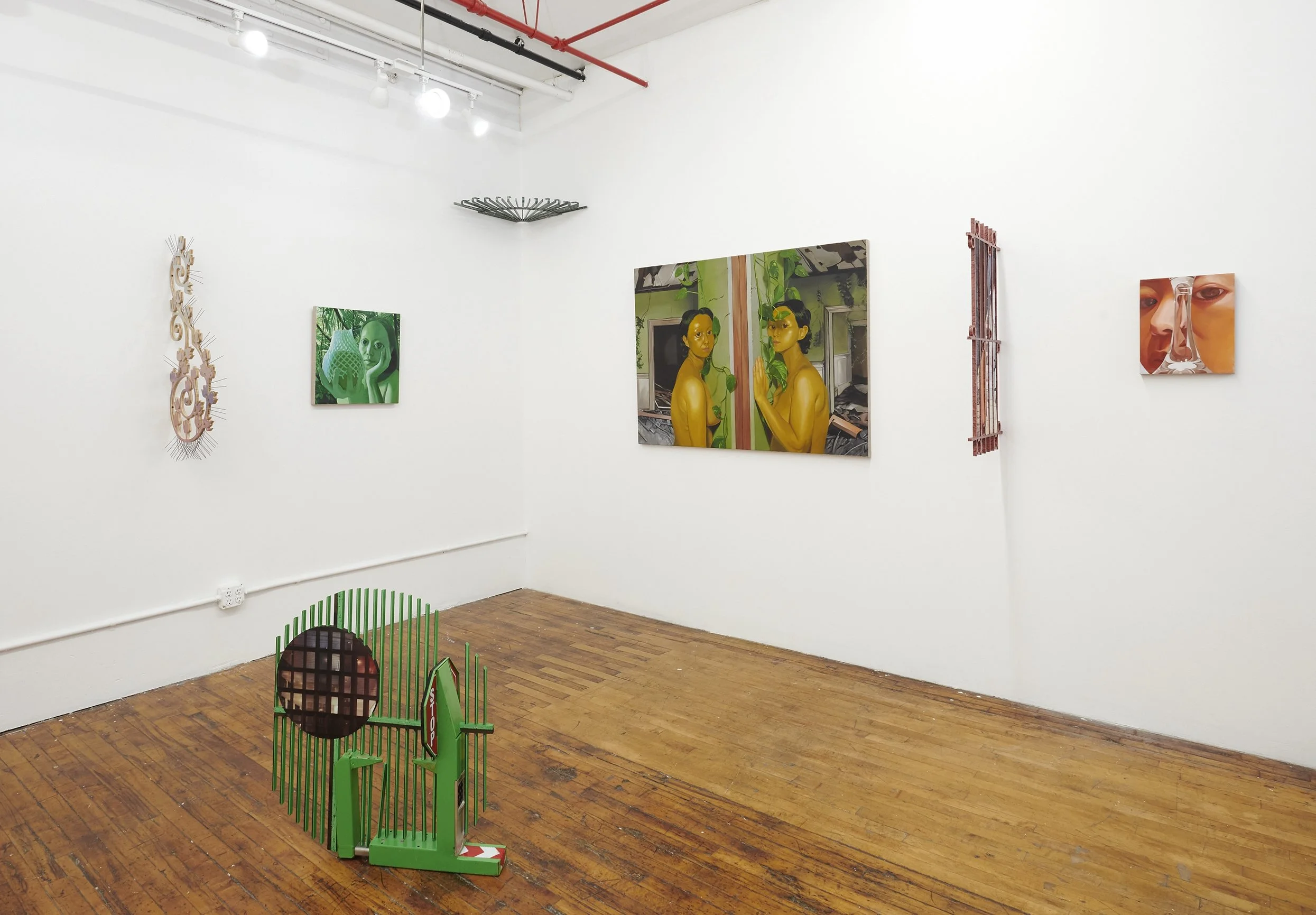
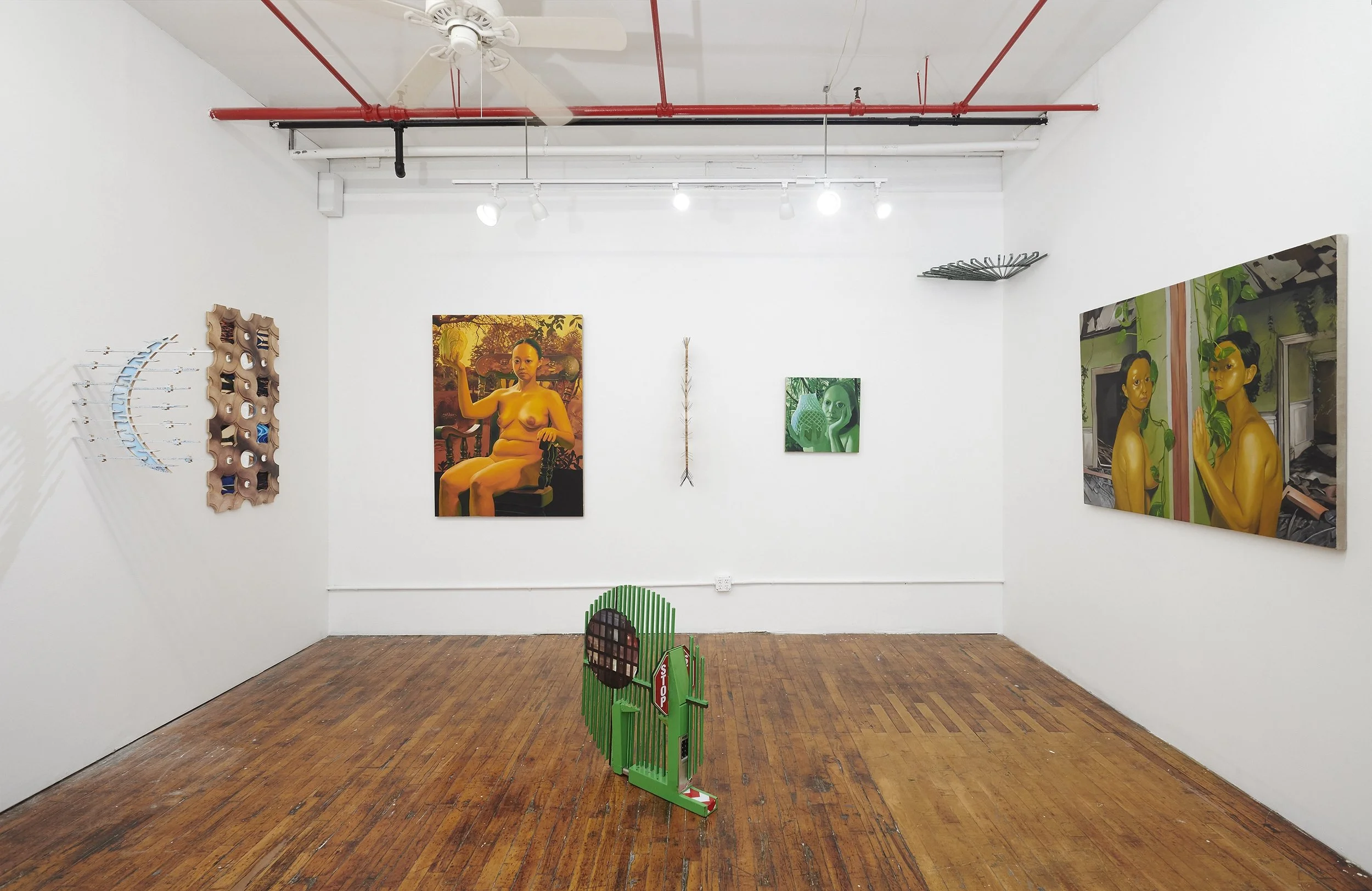
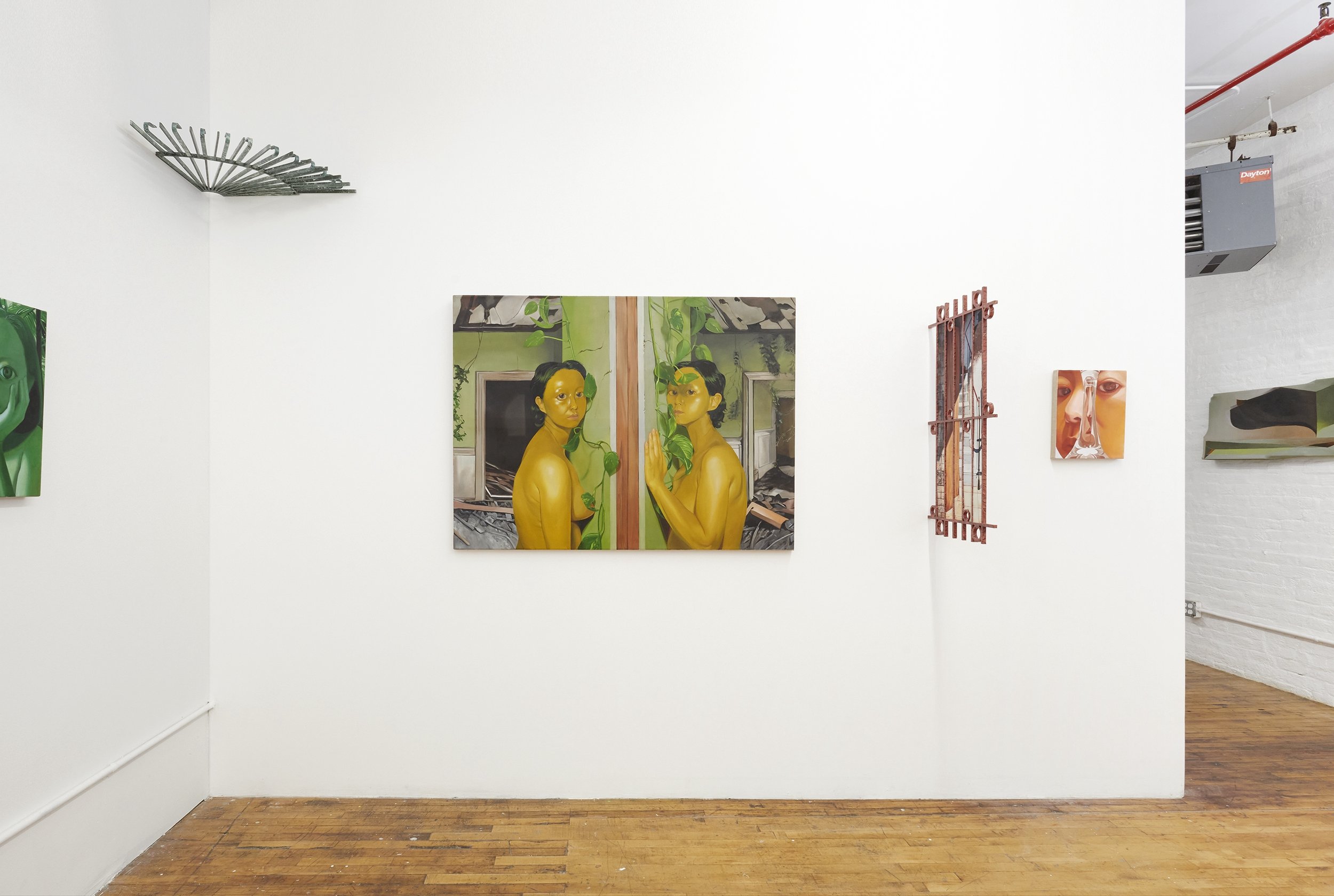
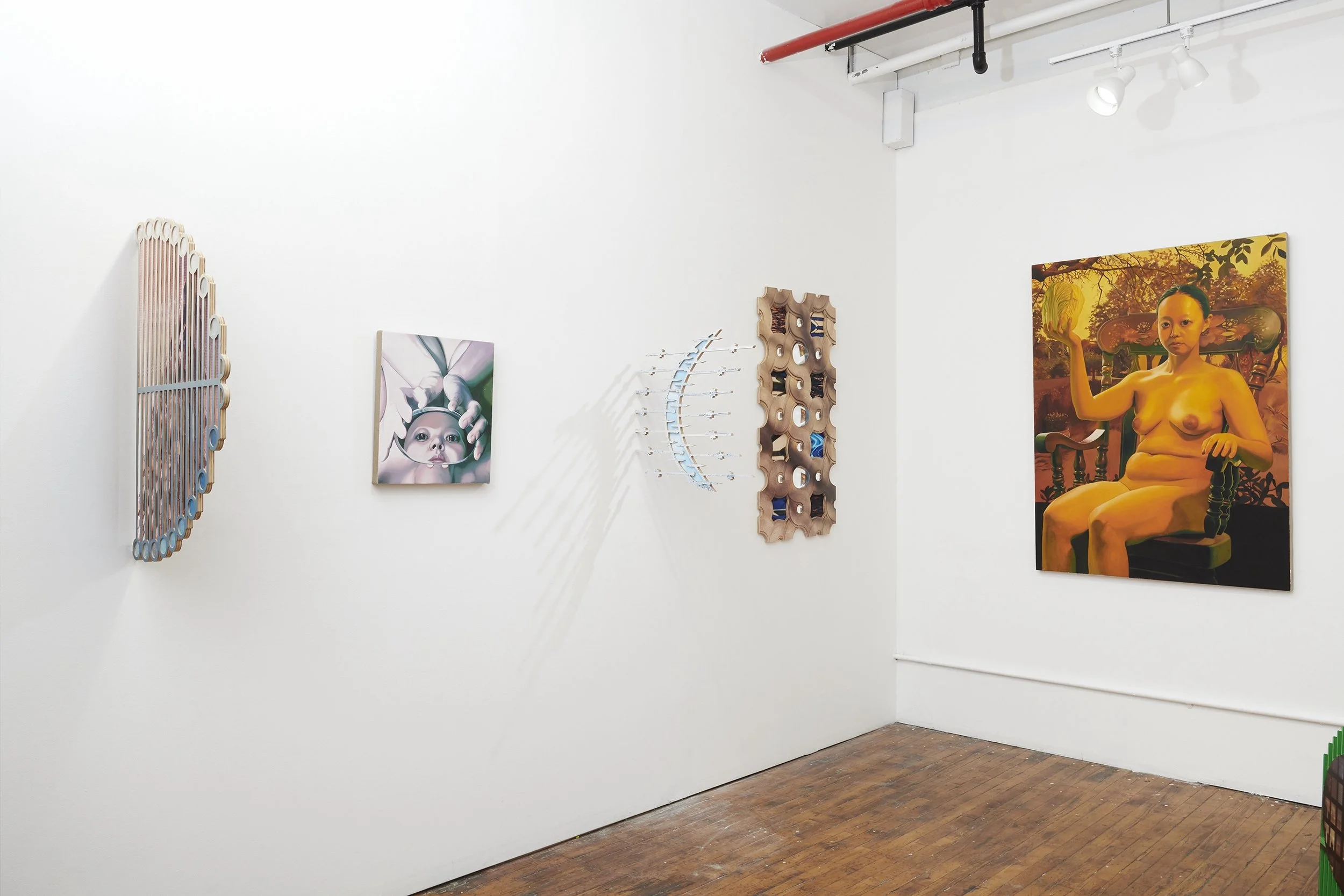
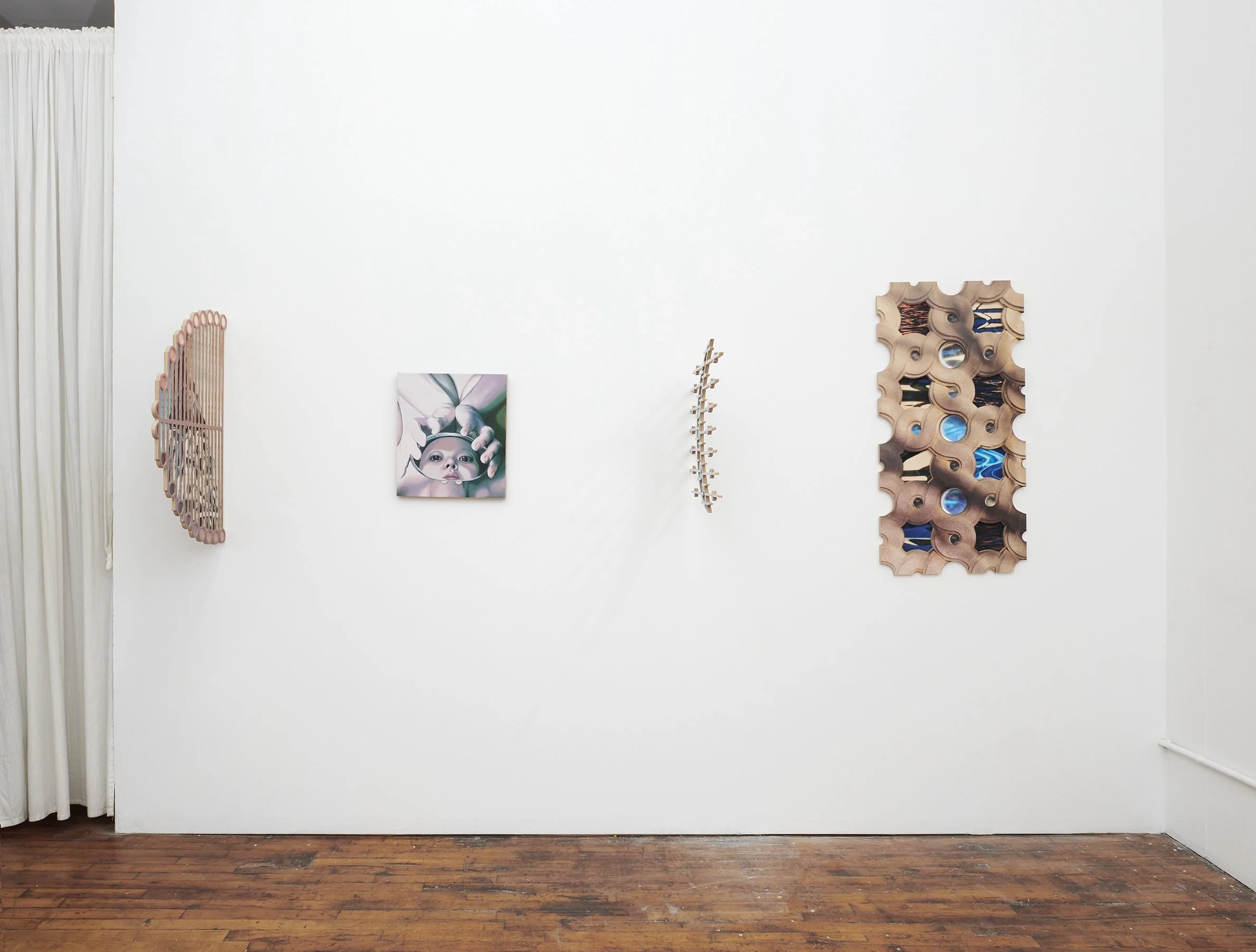
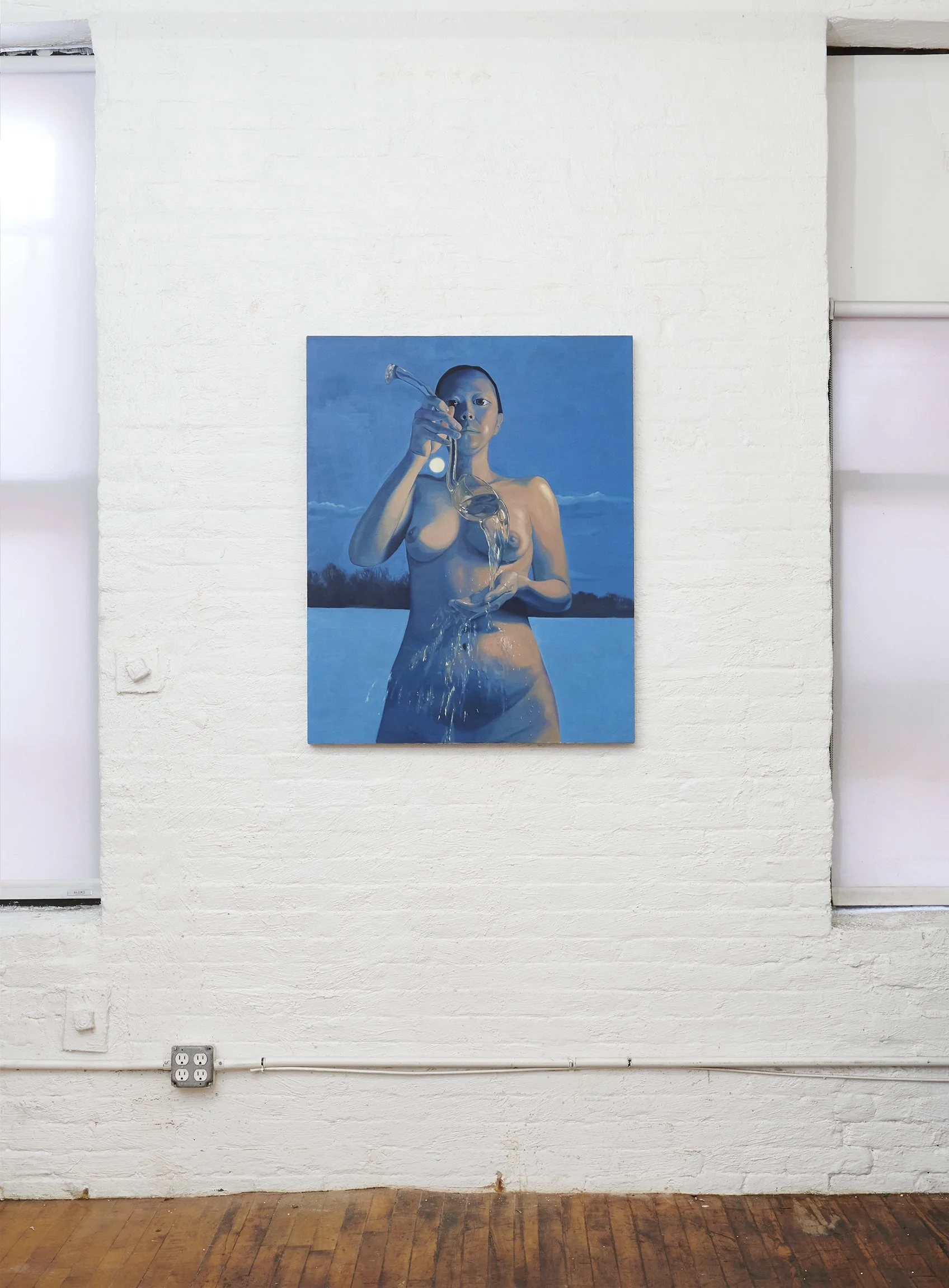
This might be the beautifully fraught moment in which we encounter Ryan Oskin and Song Watkins Park. Park confronts us from a made-place of the mind that casts her skin in a candied shell of psychic armor. We are being observed and dared to observe back. Does she want to step into the room with us, or is she content in her seductive yet chromatically insular environment of her own divination?
Meanwhile, Oskin folds the nettles and barriers of the urban landscape into a learned yearning for the open skies of the frontier. Car boots, wrought iron fences and street signs assert themselves before fading into pastoral pastiche and emotional uncertainty. We’re caught in a moment we don’t fully understand, and it’s already slipping away. If only the light could stay. / Patrick Bower, co-curator
ARTIST BIOS
Song Watkins Park is a figurative painter whose work examines narrative, identity, and the human psyche. Using herself as both subject and conduit, she constructs intimate, psychologically charged scenes that reclaim the female body as a site of strength, vulnerability, and reflection. Drawing from childhood memories and literature rooted in her upbringing in Korea, her paintings weave together cultural specificity with broader, shared human experiences. Watkins Park holds an MFA from Washington University in St. Louis and is currently an adjunct professor in the Department of Art at Saint Louis University.
Ryan Oskin explores the physical and psychological space between architectural renderings and their realization through photography, sculpture, and installation. He has had solo exhibitions at the NARS Foundation, Rubber Factory, and the Java Project in New York City. In addition, his work has been shown throughout the United States at Aperture Foundation, LVL3, Press Street, Newspace Center for Photography, and underneath the 6th Street Viaduct in Los Angeles. He graduated from Pratt Institute with a BFA in Photography in 2012. He currently lives and works in Brooklyn, N.Y.